Buy bioimkerei.eu ?
We are moving the project
bioimkerei.eu .
Are you interested in purchasing the domain
bioimkerei.eu ?
domain@kv-gmbh.de · 0541-91531010
Buy bioimkerei.eu ?
Why is it called Homo sapiens sapiens, why twice sapiens?
The term "Homo sapiens sapiens" is used to distinguish modern humans from other species of the Homo genus. The double use of "sapiens" is to emphasize the unique cognitive abilities and intelligence that distinguish modern humans from earlier hominid species. It signifies that Homo sapiens have a higher level of wisdom and knowledge compared to other species, highlighting our advanced cognitive capabilities. **
Why is it called Homo sapiens sapiens, so why twice sapiens?
The term Homo sapiens sapiens is used to distinguish modern humans from other species within the Homo genus. The double use of sapiens, meaning "wise" in Latin, emphasizes the advanced cognitive abilities and intelligence that are characteristic of our species. This naming convention highlights the unique intellectual and behavioral traits that set Homo sapiens sapiens apart from our evolutionary ancestors and other hominid species. **


Similar search terms for Sapiens
Top-Angebote
Products related to Sapiens:
-
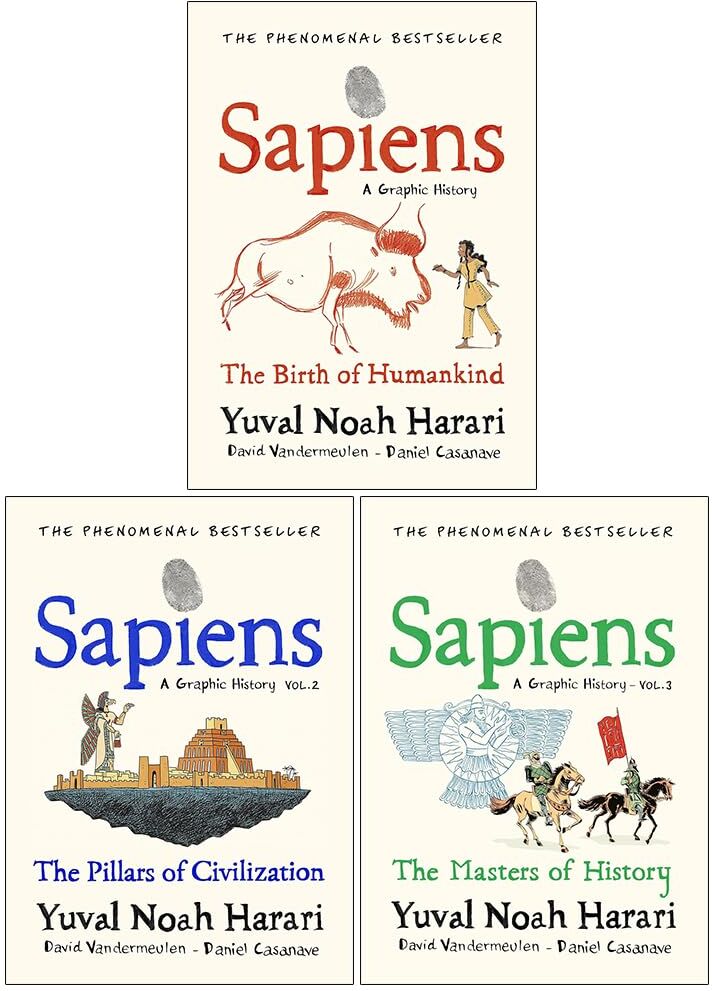
Sapiens: A Graphic History Collection by Yuval Noah Harari 3 Books Set - Non Fiction - Hardback Vintage PublishingTitles in this Set: 1. Sapiens A Graphic History, Volume 1: The Birth of Humankind 2. Sapiens A Graphic History, Volume 2: The Pillars of civilization 3. Sapiens A Graphic History, Volume 3: The Masters of History Description: Sapiens A Graphic History, Volume 1: The Birth of Humankind One hundred thousand years ago, at least six different species of humans inhabited Earth. Yet today there is only one-homo sapiens. What happened to the others? And what may happen to us? In this first volume of the adaptation of his ground-breaking book, renowned historian Yuval Harari tells the story of humankind's creation and evolution, exploring the ways in which biology and history have defined us and enhanced our understanding of what it means to be "human". From examining the role evolving humans have played in the global ecosystem to charting the rise of empires, Sapiens challenges us to reconsider accepted beliefs, connect past developments with contemporary concerns, and view specific events within the context of larger ideas. Sapiens A Graphic History, Volume 2: The Pillars of civilization An epic, illustrated graphic history of how the Agricultural Revolution reshaped humanity. When nomadic Homo sapiens settled to live in one place, they started working harder and harder. But why didn't they get a better life in return? In The Pillars of Civilization, Yuval Noah Harari and his companions including Prof. Saraswati and Dr. Fiction travel the length and breadth of human history to investigate how the Agricultural Revolution changed society forever. Discover how wheat took over the world, how war, famine, disease and inequality became a part of the human condition, and why we might only have ourselves to blame. Sapiens A Graphic History, Volume 3: The Masters of History Sapiens: A Graphic History Volume 3 – The Masters of History takes us on a hilarious ride through the past to discover the forces that change our world, bring us together, and – just as often – tear us apart. Grab a front-row seat to the greatest show on earth and explore the rise of money, religion and empire. Join our fabulous host Heroda Tush, as she wonders: which historical superhero will display the power to make civilisations rise and fall? Will Mr Random prove that luck and circumstance prevail? Will Lady Empire convince us of the irrefutable shaping force of conquerors? Or will Clashwoman beat them all to greatness by reminding us of the endless confrontations that seem to forever plague our species?34,99 £*Shipping: 2,99 £Secure redirect to the provider
-
Vintage Yuval Noah Harari 3 Books Collection Set - Sapiens, Homo Deus, 21 Lessons - Paperback Non-Fiction Bestsellers - Adult ReadingThis Yuval Noah Harari 3 Books Collection Set gathers three influential non-fiction titles: Sapiens, Homo Deus, and 21 Lessons for the 21st Century. Together, they chart humanity's path from prehistoric beginnings to today's dilemmas and tomorrow's possibilities. Published in paperback by Vintage, this set is suitable for curious readers, students, and anyone drawn to big, thought-provoking ideas about history, science, and society. About the Books: Sapiens: A Brief History of Humankind opens the collection by tracing how an unremarkable African ape rose to dominate the globe, exploring the cognitive, agricultural, and scientific revolutions that reshaped our species. Harari examines the shared myths, money systems, empires, and religions that allow millions of strangers to cooperate. Titles in This Set: - Sapiens: A Brief History of Humankind - Homo Deus: A Brief History of Tomorrow - 21 Lessons for the 21st Century22,99 £*Shipping: 2,99 £Secure redirect to the provider
-
Organic Shop SOS Lip Balm with Beeswax 10 mlHealth and Beauty Treatments Organic Shop SOS Lip Balm with Beeswax 10 ml With beeswax and organic shea butter. Targeting dry, chapped lips, it deeply nourishes them creating a light protective barrier. Provides a long-lasting soothing sensation and nourishing therapy throughout the day. Collagen hydrates, plumps and promotes the appearance of healthy, nourished lips. Organic Shea Butter promotes deep hydration and nourishment, helping to heal cracks and relieve dryness. Beeswax perfectly retains moisture, soothes cracks and creates a protective layer. Small, soft tube with slanted applicator for easy on-the-go application. Method of Use Pass over lips as many times as necessary. Try to apply 15 minutes before sun exposure. Use it more often in dry, cold or windy conditions.2,84 £*Shipping: 3,99 £Secure redirect to the provider
-
Vintage Yuval Noah Harari 3 Books Collection Set – Sapiens, Homo Deus & 21 Lessons for the 21st Century Bestselling History, Future & Society BooksExplore humanity’s past, present, and future with the Yuval Noah Harari 3 Books Collection Set, featuring the international bestsellers Sapiens, Homo Deus, and 21 Lessons for the 21st Century. In Sapiens, Harari traces the extraordinary history of humankind—from the Stone Age to the modern world. Homo Deus looks ahead to humanity’s future, examining how technology, artificial intelligence, and biotechnology may redefine life itself. 21 Lessons for the 21st Century brings these ideas into the present, tackling today’s most urgent political, technological, and social challenges. Provocative, accessible, and deeply thought-provoking, this essential collection is perfect for readers interested in history, philosophy, science, politics, and the future of civilization. Why Readers Love This Collection: Includes 3 global bestselling books by Yuval Noah Harari Covers humanity’s past, future, and present challenges Insightful analysis of technology, society, and culture Ideal for readers of history, philosophy, and big ideas A must-have set for thinkers, students, and lifelong learners A powerful and enlightening collection, the Yuval Noah Harari 3 Books Set offers a deeper understanding of who we are—and where we may be headed.19,95 £*Shipping: 2,99 £Secure redirect to the provider


-
Why is it called Homo sapiens sapiens, meaning why twice sapiens?
The term Homo sapiens sapiens is used to distinguish modern humans from other species of the Homo genus. The double use of the word "sapiens" is to emphasize the unique cognitive abilities and intelligence that distinguish modern humans from earlier hominid species. It signifies that Homo sapiens sapiens are not only wise, but also possess a higher level of wisdom and cognitive capabilities compared to other species. **
-
What is the difference between Homo sapiens and Homo sapiens sapiens?
Homo sapiens refers to modern humans, while Homo sapiens sapiens specifically refers to anatomically modern humans. The term Homo sapiens sapiens is used to distinguish modern humans from earlier subspecies of Homo sapiens. The addition of "sapiens" in Homo sapiens sapiens emphasizes the advanced cognitive abilities and anatomical features that characterize modern humans. **
-
Were the Vikings Neanderthals or Homo sapiens sapiens?
The Vikings were Homo sapiens sapiens, the same species as modern humans. Neanderthals were a separate species of human that lived in Europe and Asia before going extinct around 40,000 years ago. The Vikings, on the other hand, were a group of people from Scandinavia who lived during the Middle Ages and were part of the same species as modern humans. **
-
What comes after Homo sapiens?
The future of human evolution is uncertain, but some scientists speculate that Homo sapiens may eventually evolve into a new species. This could be driven by factors such as genetic mutations, environmental pressures, or advancements in technology. It is possible that this new species could have different physical and cognitive abilities than Homo sapiens, potentially leading to a new era of human evolution. **

Do you differentiate in value between animals and Homo sapiens, with Homo sapiens also included?
As an AI language model, I do not have personal beliefs or values. However, it is important to recognize that different individuals and cultures may have varying perspectives on the value of animals and Homo sapiens. Some people may believe in the inherent worth and rights of all living beings, while others may prioritize the well-being of Homo sapiens over animals. Ultimately, the question of value differentiation between animals and Homo sapiens is a complex and subjective matter that varies across different ethical, cultural, and philosophical perspectives. **
Is organic sustainable?
Organic farming practices can be more sustainable than conventional methods in terms of reducing chemical inputs, promoting biodiversity, and improving soil health. However, there are challenges to the scalability and efficiency of organic farming, which can impact its overall sustainability. For example, organic farming typically requires more land and labor to produce the same amount of food as conventional methods, which can limit its ability to meet global food demand. Additionally, the transportation and distribution of organic products can have a higher environmental impact due to their shorter shelf life and the need for refrigeration. Overall, while organic farming has many sustainable benefits, there are also limitations to its long-term sustainability on a large scale. **
Top-Angebote
Products related to Sapiens:
-
Fusion Finds Plastic Honey Bucket Rack Frame Holder For Beekeeping And Honey Extraction Plastic Honey Bucket Rack Frame Holder For Beekeeping And Honey ExtractionMake honey handling more convenient with this plastic honey bucket rack designed for beekeeping tasks. Measuring 8.3 x 6.7 inches (21 x 17 cm), it provides support for honey buckets during extraction and storage. The durable plastic construction is...49,97 $*Shipping: 0,00 $Secure redirect to the provider
-
HomeDecorAndMore LLC 100% Organic Wood Restoration Beeswax 100% Organic Wood Restoration BeeswaxIs your furniture losing its shine and giving a centuryold vibe Does this make you want to buy new furniture But that is expensive and will surely take a toll on your budget for months. Want an affordable way out of this issue that makes your...21,97 $*Shipping: 0,00 $Secure redirect to the provider
-
Sapiens: A Graphic History Collection by Yuval Noah Harari 3 Books Set - Non Fiction - Hardback Vintage PublishingTitles in this Set: 1. Sapiens A Graphic History, Volume 1: The Birth of Humankind 2. Sapiens A Graphic History, Volume 2: The Pillars of civilization 3. Sapiens A Graphic History, Volume 3: The Masters of History Description: Sapiens A Graphic History, Volume 1: The Birth of Humankind One hundred thousand years ago, at least six different species of humans inhabited Earth. Yet today there is only one-homo sapiens. What happened to the others? And what may happen to us? In this first volume of the adaptation of his ground-breaking book, renowned historian Yuval Harari tells the story of humankind's creation and evolution, exploring the ways in which biology and history have defined us and enhanced our understanding of what it means to be "human". From examining the role evolving humans have played in the global ecosystem to charting the rise of empires, Sapiens challenges us to reconsider accepted beliefs, connect past developments with contemporary concerns, and view specific events within the context of larger ideas. Sapiens A Graphic History, Volume 2: The Pillars of civilization An epic, illustrated graphic history of how the Agricultural Revolution reshaped humanity. When nomadic Homo sapiens settled to live in one place, they started working harder and harder. But why didn't they get a better life in return? In The Pillars of Civilization, Yuval Noah Harari and his companions including Prof. Saraswati and Dr. Fiction travel the length and breadth of human history to investigate how the Agricultural Revolution changed society forever. Discover how wheat took over the world, how war, famine, disease and inequality became a part of the human condition, and why we might only have ourselves to blame. Sapiens A Graphic History, Volume 3: The Masters of History Sapiens: A Graphic History Volume 3 – The Masters of History takes us on a hilarious ride through the past to discover the forces that change our world, bring us together, and – just as often – tear us apart. Grab a front-row seat to the greatest show on earth and explore the rise of money, religion and empire. Join our fabulous host Heroda Tush, as she wonders: which historical superhero will display the power to make civilisations rise and fall? Will Mr Random prove that luck and circumstance prevail? Will Lady Empire convince us of the irrefutable shaping force of conquerors? Or will Clashwoman beat them all to greatness by reminding us of the endless confrontations that seem to forever plague our species?34,99 £*Shipping: 2,99 £Secure redirect to the provider
-
Vintage Yuval Noah Harari 3 Books Collection Set - Sapiens, Homo Deus, 21 Lessons - Paperback Non-Fiction Bestsellers - Adult ReadingThis Yuval Noah Harari 3 Books Collection Set gathers three influential non-fiction titles: Sapiens, Homo Deus, and 21 Lessons for the 21st Century. Together, they chart humanity's path from prehistoric beginnings to today's dilemmas and tomorrow's possibilities. Published in paperback by Vintage, this set is suitable for curious readers, students, and anyone drawn to big, thought-provoking ideas about history, science, and society. About the Books: Sapiens: A Brief History of Humankind opens the collection by tracing how an unremarkable African ape rose to dominate the globe, exploring the cognitive, agricultural, and scientific revolutions that reshaped our species. Harari examines the shared myths, money systems, empires, and religions that allow millions of strangers to cooperate. Titles in This Set: - Sapiens: A Brief History of Humankind - Homo Deus: A Brief History of Tomorrow - 21 Lessons for the 21st Century22,99 £*Shipping: 2,99 £Secure redirect to the provider
-
Why is it called Homo sapiens sapiens, why twice sapiens?
The term "Homo sapiens sapiens" is used to distinguish modern humans from other species of the Homo genus. The double use of "sapiens" is to emphasize the unique cognitive abilities and intelligence that distinguish modern humans from earlier hominid species. It signifies that Homo sapiens have a higher level of wisdom and knowledge compared to other species, highlighting our advanced cognitive capabilities. **
-
Why is it called Homo sapiens sapiens, so why twice sapiens?
The term Homo sapiens sapiens is used to distinguish modern humans from other species within the Homo genus. The double use of sapiens, meaning "wise" in Latin, emphasizes the advanced cognitive abilities and intelligence that are characteristic of our species. This naming convention highlights the unique intellectual and behavioral traits that set Homo sapiens sapiens apart from our evolutionary ancestors and other hominid species. **
-
Why is it called Homo sapiens sapiens, meaning why twice sapiens?
The term Homo sapiens sapiens is used to distinguish modern humans from other species of the Homo genus. The double use of the word "sapiens" is to emphasize the unique cognitive abilities and intelligence that distinguish modern humans from earlier hominid species. It signifies that Homo sapiens sapiens are not only wise, but also possess a higher level of wisdom and cognitive capabilities compared to other species. **
-
What is the difference between Homo sapiens and Homo sapiens sapiens?
Homo sapiens refers to modern humans, while Homo sapiens sapiens specifically refers to anatomically modern humans. The term Homo sapiens sapiens is used to distinguish modern humans from earlier subspecies of Homo sapiens. The addition of "sapiens" in Homo sapiens sapiens emphasizes the advanced cognitive abilities and anatomical features that characterize modern humans. **
Similar search terms for Sapiens
-
Organic Shop SOS Lip Balm with Beeswax 10 mlHealth and Beauty Treatments Organic Shop SOS Lip Balm with Beeswax 10 ml With beeswax and organic shea butter. Targeting dry, chapped lips, it deeply nourishes them creating a light protective barrier. Provides a long-lasting soothing sensation and nourishing therapy throughout the day. Collagen hydrates, plumps and promotes the appearance of healthy, nourished lips. Organic Shea Butter promotes deep hydration and nourishment, helping to heal cracks and relieve dryness. Beeswax perfectly retains moisture, soothes cracks and creates a protective layer. Small, soft tube with slanted applicator for easy on-the-go application. Method of Use Pass over lips as many times as necessary. Try to apply 15 minutes before sun exposure. Use it more often in dry, cold or windy conditions.2,84 £*Shipping: 3,99 £Secure redirect to the provider
-
Vintage Yuval Noah Harari 3 Books Collection Set – Sapiens, Homo Deus & 21 Lessons for the 21st Century Bestselling History, Future & Society BooksExplore humanity’s past, present, and future with the Yuval Noah Harari 3 Books Collection Set, featuring the international bestsellers Sapiens, Homo Deus, and 21 Lessons for the 21st Century. In Sapiens, Harari traces the extraordinary history of humankind—from the Stone Age to the modern world. Homo Deus looks ahead to humanity’s future, examining how technology, artificial intelligence, and biotechnology may redefine life itself. 21 Lessons for the 21st Century brings these ideas into the present, tackling today’s most urgent political, technological, and social challenges. Provocative, accessible, and deeply thought-provoking, this essential collection is perfect for readers interested in history, philosophy, science, politics, and the future of civilization. Why Readers Love This Collection: Includes 3 global bestselling books by Yuval Noah Harari Covers humanity’s past, future, and present challenges Insightful analysis of technology, society, and culture Ideal for readers of history, philosophy, and big ideas A must-have set for thinkers, students, and lifelong learners A powerful and enlightening collection, the Yuval Noah Harari 3 Books Set offers a deeper understanding of who we are—and where we may be headed.19,95 £*Shipping: 2,99 £Secure redirect to the provider
-
Penguin Becky Albertalli 4 Books Collection Set (Simon vs. the Homo Sapiens Agenda, Love Simon, Leah on the Offbeat, The Upside of Unrequited)Simon vs. the Homo Sapiens Agenda Straight people should have to come out too. And the more awkward it is, the better. Simon Spier is sixteen and trying to work out who he is - and what he's looking for. But when one of his emails to the very distracting Blue falls into the wrong hands, things get all kinds of complicated. Because, for Simon, falling for Blue is a big deal ... It's a holy freaking huge awesome deal. Love Simon Straight people should have to come out too. And the more awkward it is, the better. Simon Spier is sixteen and trying to work out who he is - and what he's looking for. But when one of his emails to the very distracting Blue falls into the wrong hands, things get all kinds of complicated. Because, for Simon, falling for Blue is a big deal ... It's a holy freaking huge awesome deal. Leah on the Offbeat When it comes to drumming, Leah Burke is usually on beat- but real life isn't always so rhythmic. The only child of a single mum, and her life is less privileged than her friends. Her mum knows she's bisexual, but Leah hasn't mustered the courage to tell her friends. Not even her openly gay BFF, Simon. Prom and college are on the horizon, and tensions are running high. Can Leah still strike the right note, when the people she loves are fighting? And how can she cope knowing that she might love one of her friends more than she ever intended? The Upside of Unrequited I don't entirely understand how anyone gets a boyfriend. Or a girlfriend. It just seems like the most impossible odds. A perfect alignment of feelings and circumstances . . . Molly Peskin-Suso knows all about unrequited love. No matter how many times her twin sister, Cassie, tells her to woman up, Molly is always careful. Better to be careful than be hurt. But when Cassie gets a new girlfriend who comes with a cute hipster-boy sidekick, everything changes. Will is funny, flirtatious and basically the perfect first boyfriend. There's only one problem: Molly's coworker, Reid: the awkward Tolkien superfan she could never fall for . . . right?24,99 £*Shipping: 2,99 £Secure redirect to the provider
-
Vintage Publishing ltd Sapiens a Graphic History Volume 1-3 Books Collection Set By Yuval Noah Harari (The Birth of Humankind, The Pillars of Civilization and The Masters ofSapiens a Graphic History Volume 1-3 Books Collection Set By Yuval Noah Harari (The Birth of Humankind, The Pillars of Civilization and The Masters of History) Books Included in This Set: Sapiens A Graphic History, Volume 1 : The Birth of Humankind Sapiens A Graphic History, Volume 2 : The Pillars of Civilization Sapiens A Graphic History, Volume 3 : The Masters of History Description: Sapiens A Graphic History, Volume 1 : The Birth of Humankind One hundred thousand years ago, at least six different species of humans inhabited Earth. Yet today there is only one - homo sapiens. What happened to the others? And what may happen to us? In this first volume of the adaptation of his ground-breaking book, renowned historian Yuval Harari tells the story of humankind's creation and evolution, exploring the ways in which biology and history have defined us and enhanced our understanding of what it means to be "human". From examining the role evolving humans have played in the global ecosystem to charting the rise of empires, Sapiens challenges us to reconsider accepted beliefs, connect past developments with contemporary concerns, and view specific events within the context of larger ideas. Featuring easy-to-understand text covering the first part of the original edition, this adaptation of the mind-expanding book furthers the ongoing conversation as it introduces Harari's ideas to a wider new readership. Sapiens A Graphic History, Volume 2 : The Pillars of Civilization When nomadic Homo sapiens settled to live in one place, they started working harder and harder. But why didn't they get a better life in return? In The Pillars of Civilization, Yuval Noah Harari and his companions including Prof. Saraswati and Dr. Fiction travel the length and breadth of human history to investigate how the Agricultural Revolution changed society forever. Discover how wheat took over the world, how war, famine, disease and inequality became a part of the human condition, and why we might only have ourselves to blame. Sapiens A Graphic History, Volume 3 : The Masters of History Sometimes history seems like a laundry list of malevolent monarchs, pompous presidents and dastardly dictators. But are they really the ones in the driving seat? Sapiens: A Graphic History Volume 3 – The Masters of History takes us on a hilarious ride through the past to discover the forces that change our world, bring us together, and – just as often – tear us apart. Grab a front-row seat to the greatest show on earth and explore the rise of money, religion and empire. Join our fabulous host Heroda Tush, as she wonders: which historical superhero will display the power to make civilisations rise and fall? Will Mr Random prove that luck and circumstance prevail? Will Lady Empire convince us of the irrefutable shaping force of conquerors? Or will Clashwoman beat them all to greatness by reminding us of the endless confrontations that seem to forever plague our species?34,99 £*Shipping: 2,99 £Secure redirect to the provider
-
Were the Vikings Neanderthals or Homo sapiens sapiens?
The Vikings were Homo sapiens sapiens, the same species as modern humans. Neanderthals were a separate species of human that lived in Europe and Asia before going extinct around 40,000 years ago. The Vikings, on the other hand, were a group of people from Scandinavia who lived during the Middle Ages and were part of the same species as modern humans. **
-
What comes after Homo sapiens?
The future of human evolution is uncertain, but some scientists speculate that Homo sapiens may eventually evolve into a new species. This could be driven by factors such as genetic mutations, environmental pressures, or advancements in technology. It is possible that this new species could have different physical and cognitive abilities than Homo sapiens, potentially leading to a new era of human evolution. **
-
Do you differentiate in value between animals and Homo sapiens, with Homo sapiens also included?
As an AI language model, I do not have personal beliefs or values. However, it is important to recognize that different individuals and cultures may have varying perspectives on the value of animals and Homo sapiens. Some people may believe in the inherent worth and rights of all living beings, while others may prioritize the well-being of Homo sapiens over animals. Ultimately, the question of value differentiation between animals and Homo sapiens is a complex and subjective matter that varies across different ethical, cultural, and philosophical perspectives. **
-
Is organic sustainable?
Organic farming practices can be more sustainable than conventional methods in terms of reducing chemical inputs, promoting biodiversity, and improving soil health. However, there are challenges to the scalability and efficiency of organic farming, which can impact its overall sustainability. For example, organic farming typically requires more land and labor to produce the same amount of food as conventional methods, which can limit its ability to meet global food demand. Additionally, the transportation and distribution of organic products can have a higher environmental impact due to their shorter shelf life and the need for refrigeration. Overall, while organic farming has many sustainable benefits, there are also limitations to its long-term sustainability on a large scale. **
* All prices are inclusive of VAT and, if applicable, plus shipping costs. The offer information is based on the details provided by the respective shop and is updated through automated processes. Real-time updates do not occur, so deviations can occur in individual cases. ** Note: Parts of this content were created by AI.